Every 80% window USCIS currently publishes for the six forms that cover most immigrant journeys — plus what changed versus the previous two releases. Data: September 17, 2026.
USCIS published data · September 17, 2026 · refreshed monthly
The official tables overwrite themselves every month. Kept side by side, three releases tell you whether queues are moving:
National headline waits across the last three official releases (80% windows, months)
Form / queue
July release
August release
September release
Change
I-485 family — median of field offices
14.2–29.2 mo
15.2–31.5 mo
16–32.8 mo
+1.3 mo
N-400 — median of field offices
10.5–13.5 mo
11.5–14.5 mo
12.5–15.5 mo
+1 mo
I-130 immediate relative — National Benefits Center
52–56 mo
52.5–56.5 mo
53–58 mo
+1.5 mo
I-140 EB-2 advanced degree — service centers
2.5–8 mo
2.5–7.5 mo
3–6.5 mo
-1 mo
I-765 (c)(9) pending I-485 — service centers
12–15 mo
12.5–15.5 mo
12.5–16 mo
+0.5 mo
I-131 advance parole — service centers
23–27.5 mo
24–29.5 mo
26.5–34 mo
+4.5 mo
Form I-485 — green card (adjustment of status)
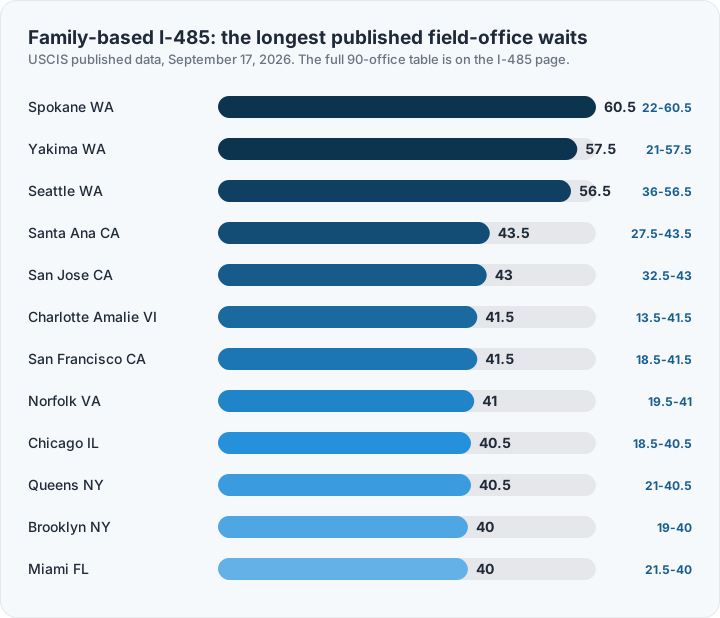
Family-based I-485 cases are interviewed and decided at 90 field offices. The median published window across offices is 16–32.8 mo, but the office-to-office spread is the real story — the same application can face very different waits across town.
The twelve longest published windows. The full sortable 90-office table is on the I-485 page.
Form I-130 — family petition
Most I-130 petitions appear at the National Benefits Center in today's tables; petition adjudication is published under the Service Centers heading; a historical field-office queue completes older cases. Immediate-relative petitions at the National Benefits Center run 53–58 mo. Rows marked with a note reflect statutory limits on visas, not slow work.
I-130 by category and queue — 80% windows in months (September 17, 2026)
Family category
National Benefits Center
Service Centers
All field offices
U.S. citizen for spouse, parent or child under 21 (immediate relative)
53–58 mo
25.5–34 mo
83.5–113 mo
Permanent resident for spouse or child under 21
52–56.5 mo
up to 49.5 mo
139–300.5 mo
U.S. citizen for unmarried son or daughter (21+)
52.5–55.5 mo
up to 109.5 mo
195–268 mo
Permanent resident for unmarried son or daughter (21+)
53.5–56 mo
up to 76 mo
188.5–340 mo
U.S. citizen for married son or daughter
53.5–64.5 mo
up to 151 mo
110.5–159 mo
U.S. citizen for brother or sister
57–66.5 mo
up to 177 mo
286.5–306.5 mo
Full breakdown, official notes and what happens after approval: the I-130 page.
Form I-140 — employment petition
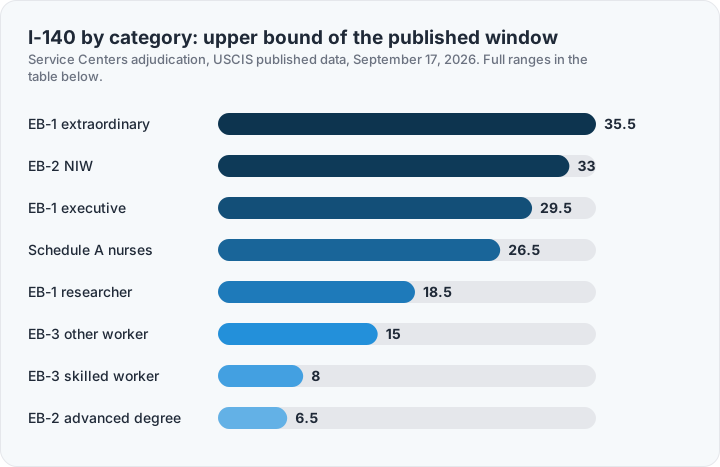
Every EB category is its own queue. The full table with official notes is on the I-140 page.
Form N-400 — naturalization
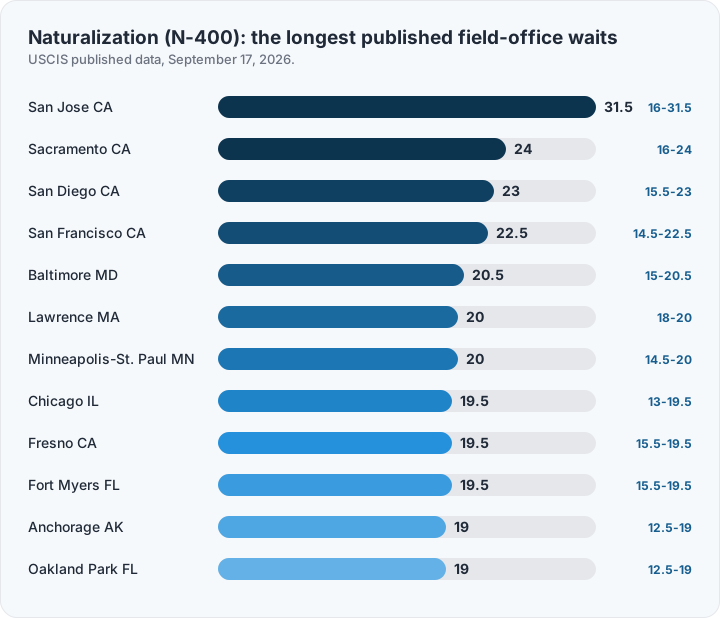
Citizenship interviews happen at field offices; the median published window across offices is 12.5–15.5 mo. Add ceremony scheduling after approval, which the published range does not include.
The full sortable table is on the N-400 page.
Form I-765 — work permit (EAD)
Work permits are queued by category code. The most-watched code is (c)(9) — the card you file for while an I-485 is pending:
Common I-765 categories — 80% windows (September 17, 2026)
Category
Office / queue
Published 80% window
vs previous release
Inquire after
(c)(9) · Pending I-485 adjustment
National Benefits Center
12–16.5 mo
+1.5 mo
June 11, 2025
All other categories
National Benefits Center
10.5–14.5 mo
+1.5 mo
July 31, 2025
(c)(26) · H-4 spouse of H-1B
Service Centers
17.5–19 mo
+0.5 mo
March 18, 2025
(c)(3) · F-1 student
Service Centers
5–6.5 mo
+0.5 mo
April 10, 2026
(c)(8) · Asylum pending — renewal
Service Centers
18.5–21.5 mo
+2.5 mo
January 04, 2025
(c)(8) · Asylum pending — initial
Service Centers
1–4 mo
no change
September 18, 2026
(c)(9) · Pending I-485 adjustment
Service Centers
12.5–16 mo
+0.5 mo
June 22, 2025
All other categories
Service Centers
16–19 mo
+0.5 mo
March 17, 2025
Every published category with plain-language labels: the I-765 page.
Form I-131 — travel documents
I-131 — 80% windows (September 17, 2026)
Category
Office / queue
Published 80% window
vs previous release
Inquire after
Re-entry permit / refugee travel document
Service Centers
16.5–21.5 mo
+0.5 mo
January 08, 2025
Advance parole
Service Centers
26.5–34 mo
+4.5 mo
December 25, 2023
Why advance parole planning matters: the I-131 page.
How the numbers are made (and how to read them)
USCIS measures completed cases per form, office and category, then publishes the window covering roughly 80% of them, along with a case inquiry date — the oldest receipt date it claims to still be working on. Everything on this page is that data, reorganized: pivoted, sorted, charted and kept across releases. Read any range as an envelope, not a promise: roughly one case in ten finishes faster than the lower bound, one in ten slower than the upper bound.
Two structural quirks are worth knowing. First, interview forms (I-485, N-400) publish per field office, while mail-adjudicated forms publish per center — so "the wait" is a different animal for each. Second, a few categories carry statutory limits on visa supply; USCIS marks those rows, and we carry the marks forward, because no amount of adjudication speed fixes a queue that law caps.
For the waiting-room vocabulary — receipt numbers, RFEs, inquiry dates — the glossary has one-paragraph definitions, and the wait estimator turns the tables into a personal read.
Frequently asked questions
How current are these numbers?
This dashboard reflects the USCIS release dated September 17, 2026. USCIS updates its published tables roughly monthly; this site refreshes with each release and keeps the two prior releases for trend.
Why do I-485 and N-400 show per-office tables but I-140 shows one queue?
That is how USCIS publishes them: interview-based forms are measured at the deciding field office, while mail-based petition work is measured per center or category. The structure mirrors the official tables on purpose.
Can I get these numbers faster than the official site?
No — same source, same month. What this site adds is organization: sorting, comparison, history and plain-language labels. The official case status tool remains the only way to see your own case.