First: why many people never attend an appointment
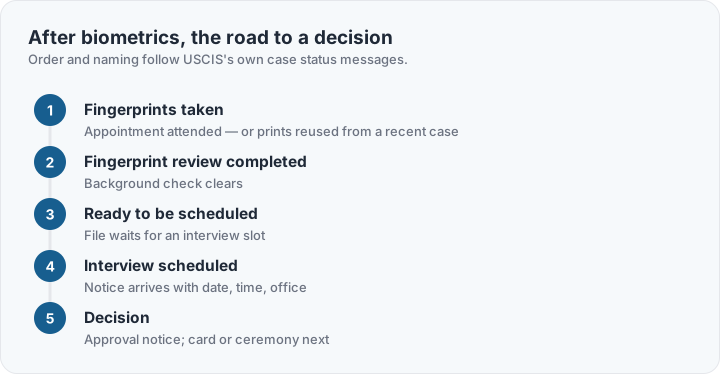
USCIS increasingly reuses fingerprints from a recent case. When that happens, the status simply flips to “fingerprints were taken” with no appointment letter at all — for years this has been standard on a large share of I-485 and N-400 cases. If an appointment does arrive, attend it; if the date truly cannot work, reschedule through official channels before the date. A missed biometrics appointment without notice is one of the classic self-inflicted delays in immigration.
What biometrics actually are, and how long they last
The appointment, when one happens, is quick: fingerprints, a photograph, a signature. The outputs feed FBI background checks and identity verification, and they stay usable for a standard window measured from the check — which is exactly why recent prints can be reused for a new filing instead of collected again. Reuse is not luck or favoritism; it is the system working as designed, and it saves every applicant one appointment, one trip and one reschedule risk. If your status shows fingerprints taken but you remember no appointment, this is why — and nothing is missing from your file.
If you do have an appointment: the short checklist
Arrivals beat apologetics: bring the appointment letter (paper or on your phone), a government-issued photo ID, and copies of any notice USCIS sent about the case. The visit itself is usually over in minutes — the line is often longer than the appointment. Rescheduling exists for genuine conflicts, but it must happen through official channels before the date; no-shows are reported to the file and can stall a case for months. One more habit worth adopting: photograph every notice the day it arrives, so a lost paper never becomes a lost fact.
Then: the quiet middle, measured honestly
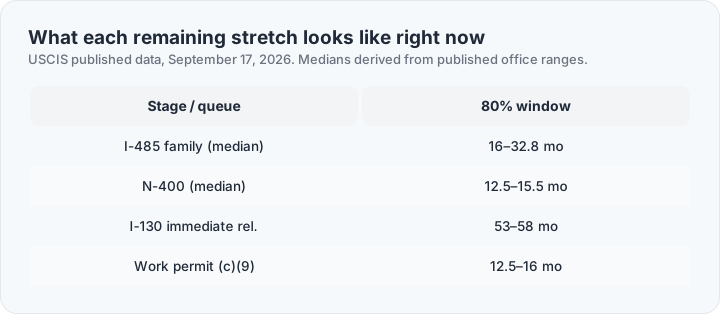
After fingerprint review clears, the file waits for officer time — and this is where the published windows earn their keep. For family-based I-485, the median field-office window is 16–32.8 mo; for N-400, 12.5–15.5 mo. Both are envelopes around this exact stretch of the journey, office by office, on the I-485 and N-400 pages. Inside the window, silence is normal; the estimator tells you which side of it you are on.
The endgames
From here the paths split by form. I-485 cases usually interview — the status walk runs “ready to be scheduled” → “interview scheduled” → decision, with the card in production a few weeks after approval. N-400 cases add the English and civics test at the interview, then the oath ceremony — which, remember, sits outside the published window. Employment-based petitions (I-140) mostly skip interviews entirely and end in an approval notice in the mail.
When the quiet goes too long
Past the upper bound of your office's window, the published inquire-after date becomes your lever: a case inquiry through official channels is the system's own mechanism for exactly this situation, and the wait estimator tells you the moment you cross it. Keep every address current along the way — an interview notice mailed to an old address can cost more time than any queue.