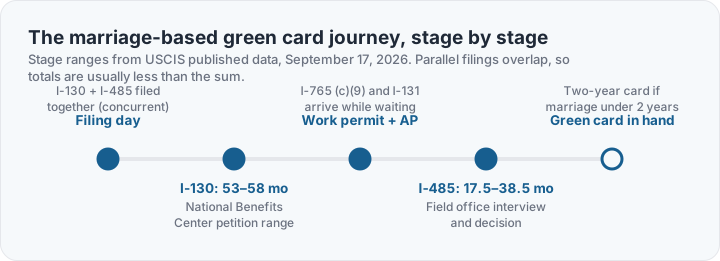
Stage 1 — the petition (I-130)
A U.S. citizen spouse files I-130 with the I-485 in one package (concurrent filing) or alone if the beneficiary is abroad. The National Benefits Center range for immediate relatives is currently 53–58 mo — details and the other five family categories on the I-130 page. Preference-category spouses (a green card holder petitioning, or a citizen's adult child) add a visa-availability wait on top, which the priority date guide explains.
Stage 2 — living while pending (I-765 + I-131)
Filed with the I-485, the work permit and travel document turn a wait into a life: jobs, driver's licenses, emergency travel. Their published windows live on the I-765 and I-131 pages.
Stage 3 — the interview and the card (I-485)
The deciding stage, at your local field office: the median family-based window across offices is 16–32.8 mo, and the office-to-office spread is where planning actually happens — the full 90-office table is on the I-485 page. Approval brings a two-year conditional card for marriages under two years old at approval, ten years otherwise.
Stage 4 — citizenship later (N-400)
Three to five years after the card, naturalization becomes available; the N-400 median window is 12.5–15.5 mo plus local ceremony scheduling. The N-400 page breaks down every office.
What stretches each stage
Every stage above has classic slowdowns, and none are mysterious. The petition stage stretches on filing errors and evidence gaps — a request for evidence resets part of the review. The adjustment stage stretches on interview logistics: reschedules, missed biometrics, and medical exams that expired before the interview. The visa-availability stage (capped categories only) moves on the State Department’s monthly bulletin, not on anything USCIS does. And the slowdown applicants cause without noticing: an address change not reported, so a scheduling notice mails into the void. None are reasons to panic — they are reasons to keep the file boring, reachable and complete while the published windows do their work.
Two routes, one timeline
Everything above describes adjustment of status inside the U.S. The consular route — beneficiary abroad — swaps the I-485 stage for National Visa Center processing and a consulate interview after the I-130: stages USCIS does not publish, which is why honest totals for that route come in ranges wider than any single table. What does not change: the petition stage, the documents, and the queues on this site.