The mechanics: a clock with a refund
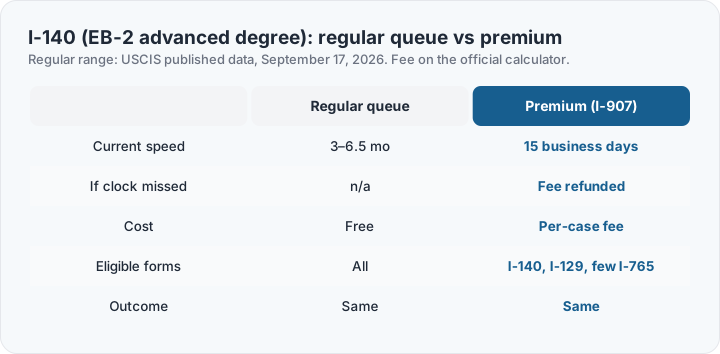
Premium processing is a contractual speed guarantee. The requester files Form I-907 with a fee, and USCIS must take an adjudication action on the case within 15 business days — approve, deny, or issue a request for evidence all count. Miss the window and USCIS refunds the fee while the case continues in premium review. That refund clause is the whole contract, and it is real: the clock is the product, not a hint.
Who qualifies
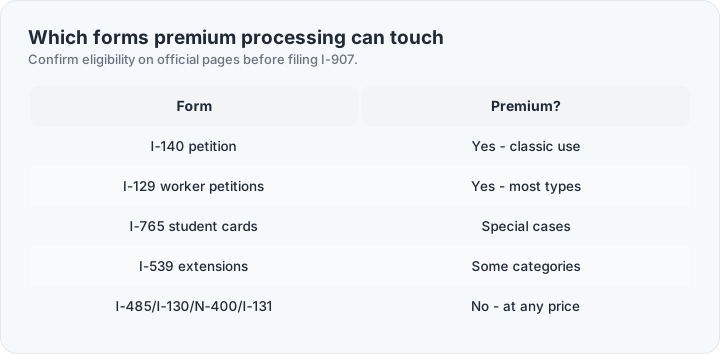
Premium covers specific form types and categories — I-140 immigrant petitions across the board, most I-129 nonimmigrant worker petitions, certain I-765 student categories in defined situations, and some I-539 extensions. It categorically does not cover I-485, I-130, N-400 or I-131: the two forms that anchor most family journeys and citizenship have no premium lane at any price. Any service offering to “expedite” those for money is selling something else.
What the fee is (and why we do not print it)
USCIS adjusts the premium fee periodically — most recently announcing inflation increases for fiscal year 2027 — so any fixed number on a web page goes stale by design. The current amount lives on USCIS's official fee calculator, which is the link we will keep giving you. What we can say without a date problem: the fee is per case, paid by requester, and refundable under the missed-clock rule above.
When premium is worth it — and when it is theater
For an I-140 whose next stage waits on the petition, premium is often genuinely decisive: fifteen business days against a published window measured in months (see the comparison above for the EB-2 example). For a fast category already running a short window, the purchase buys less. And for forms without premium eligibility, the honest alternatives are the free ones: complete filings, fast RFE responses, and a case inquiry once the published window and the inquire-after date say the wait has outrun its envelope.