What the estimator checks
Where the data comes from
The windows and inquiry dates are the same USCIS published release this whole site runs on — September 17, 2026 — kept side by side with the previous release so the estimator can also tell you whether your queue is getting better or worse. When USCIS publishes its monthly update, the estimator moves with it. For how the windows are constructed and their honest limits, the dashboard page explains the machinery.
A worked example, with real numbers
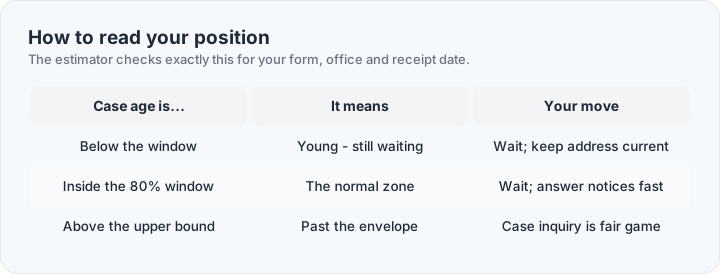
Suppose you filed a family-based I-485 and USCIS received it on March 10, 2025, and your field office’s current published window is 13.5 to 28 months with an inquire-after date of June 15, 2024. Checking in mid-October 2026, the estimator computes a case age of about 19 months — inside the window, so the verdict reads “normal”: most cases at that office finish between months 13.5 and 28, and yours is 19 months in. Six months later, a still-pending case at month 25 is still inside the window — barely. At month 29 the verdict flips to past-the-envelope; and yet the advice is still patience first, because the inquiry lever only opens once your receipt date is older than the office’s published threshold (June 15, 2024 here) — a March 2025 receipt is newer, so the normal-status assumption still covers it. That asymmetry trips people constantly, and it is the best argument for checking arithmetic instead of forum threads.
What this arithmetic cannot know
The estimator sees three things: your form, your queue and your receipt date. It cannot see your file — an RFE answered last week, a name check running longer than usual, an interview already scheduled but not yet posted. Two cases with identical dates can legitimately be in different worlds. It also inherits the official data’s shape: the published window describes completed cases, which skews slightly optimistic during a backlog surge, and a just-published release can lag reality by a few weeks. Treat the verdict as a well-informed starting point for patience — and treat anyone claiming more precision than that, on any website, as selling something.
What to do with the answer
Inside the window, the best action is usually none: keep your address current, answer any notice fast, and let the queue work. Below it, patience — your case is younger than most that finish. Above the upper bound with a receipt date older than the office's inquiry threshold, a case inquiry through official channels becomes a reasonable, systems-sanctioned step; and a file that is far past its envelope with an inquiry already ignored is what attorneys are for. The estimator's job is to put you on the right side of that decision, not to make it for you.